
Photos in this gallery
Etna, Greek temples and Taormina · Jul 2024 · 26 photos
Ortigia
The harbor of Syracuse, with Ortigia across the breakwater, and a calm sea at sunset.

Ortigia, Siracuza, Italy 
Ortigia, Siracuza, Italy
Sicily at the end of July: fierce sun, almost cloudless skies, turquoise sea and sun-baked stone. The route begins on the east coast in Syracuse, where Ortigia, the island joined to the rest of the city by bridges, holds the old center of the colony founded by Greeks from Corinth in the 8th century BC. From the breakwater, Ortigia appears across the harbor, and in the evening the sea settles into shades of pink and green. Syracuse is a UNESCO World Heritage Site together with the necropolis of Pantalica.
Isola Bella
The small island below Taormina, tied to the shore by a strip of pebbles, with clear water and Mediterranean plants on the rocks.

Isola Bella, Taormina, Italy 
Isola Bella, Taormina, Italy 
Isola Bella, Taormina, Italy
Etna
Side craters and slopes of black ash on the volcano's southern flank, with clouds and fumes around the summit.

Etna, Nicolosi, Italy 
Etna, Nicolosi, Italy 
Etna, Nicolosi, Italy 
Etna, Nicolosi, Italy 
Etna, Nicolosi, Italy
Farther north, below Taormina, Isola Bella is a small green island tied to the shore by a narrow strip of pebbles and protected as a nature reserve, ringed by clear water, rocks and Mediterranean plants on the cliffs. The next day brings Etna, the tallest active volcano in Europe, about 3,300 m high, a figure that changes with its eruptions. On the southern flank above Nicolosi, the road climbs among cones and side craters covered in black ash and lapilli, their walls stained rust red, while clouds and fumes gather around the summit. Mount Etna has been a UNESCO World Heritage Site since 2013.
Valley of the Temples
The Doric temples of Akragas: Concordia, Juno and the Dioscuri, and the old city wall cut with tombs.

Valley of the Temples, Agrigento, Italy 
Valley of the Temples, Agrigento, Italy 
Valley of the Temples, Agrigento, Italy 
Valley of the Temples, Agrigento, Italy 
Valley of the Temples, Agrigento, Italy 
Valley of the Temples, Agrigento, Italy
To the southwest, at Agrigento, the Valley of the Temples preserves the ruins of the Greek city of Akragas, founded in the 6th century BC. The Temple of Concordia is one of the best-preserved Doric temples in the world; the Temple of Juno stands on the eastern ridge with part of its colonnade still upright, and four columns with a corner of entablature remain of the Temple of the Dioscuri. Between the temples, the old city wall is cut with tombs from the early Christian centuries. The site has been on the UNESCO list since 1997.
San Vito Lo Capo
The pale sand beach and turquoise water below Monte Monaco, and the rocky coast south of the town.

San Vito Lo Capo, Italy 
San Vito Lo Capo, Italy 
San Vito Lo Capo, Italy 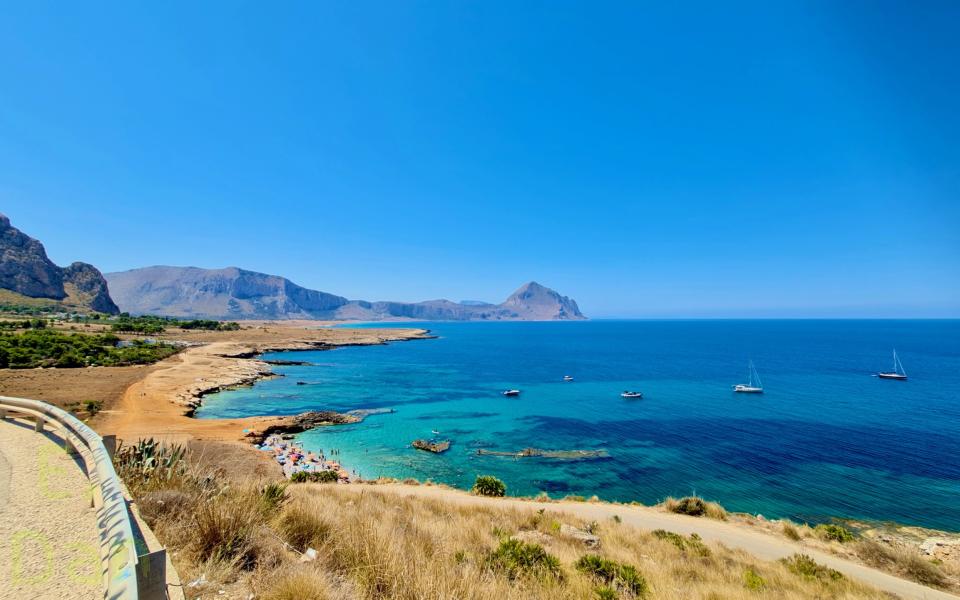
San Vito Lo Capo, Italy
Botanical Garden
Palermo's botanical garden, founded in the late 18th century, with paths shaded by palms and tropical trees.

Botanical Garden, Palermo, Italy
On the northwest coast, San Vito Lo Capo has a beach of pale sand and turquoise water beneath the limestone face of Monte Monaco, and south of the town the rocky shore breaks into small coves. Castellammare del Golfo is seen from the hills, with its harbor, the castle on its headland and the wide gulf that bears its name. In Palermo, the botanical garden, founded in the late 18th century, has paths shaded by palms and tropical trees.
Castellammare del Golfo
The town from the hills, with its harbor, the castle on the headland and the wide gulf.

Castellammare del Golfo, Italy 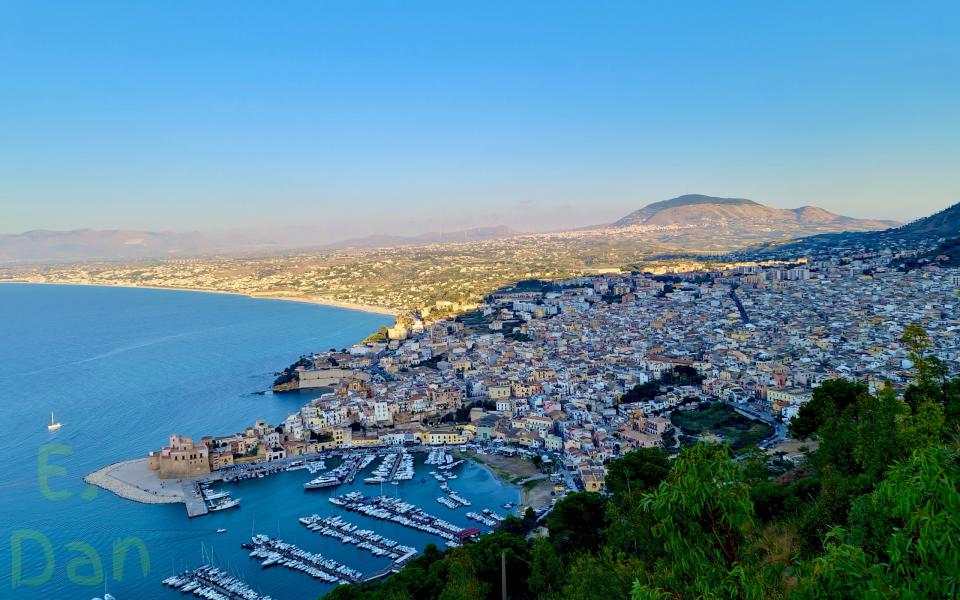
Castellammare del Golfo, Italy
The last day is in Cefalù, where the Norman cathedral, begun in 1131 by King Roger II, with its two facade towers, stands at the foot of La Rocca, and the sea washes against the limestone rocks at the edge of town. The cathedral is part of the UNESCO site of Arab-Norman Palermo, together with monuments in Palermo and the cathedral of Monreale.
Cefalù
The Norman cathedral at the foot of La Rocca and the limestone shore beside the town.
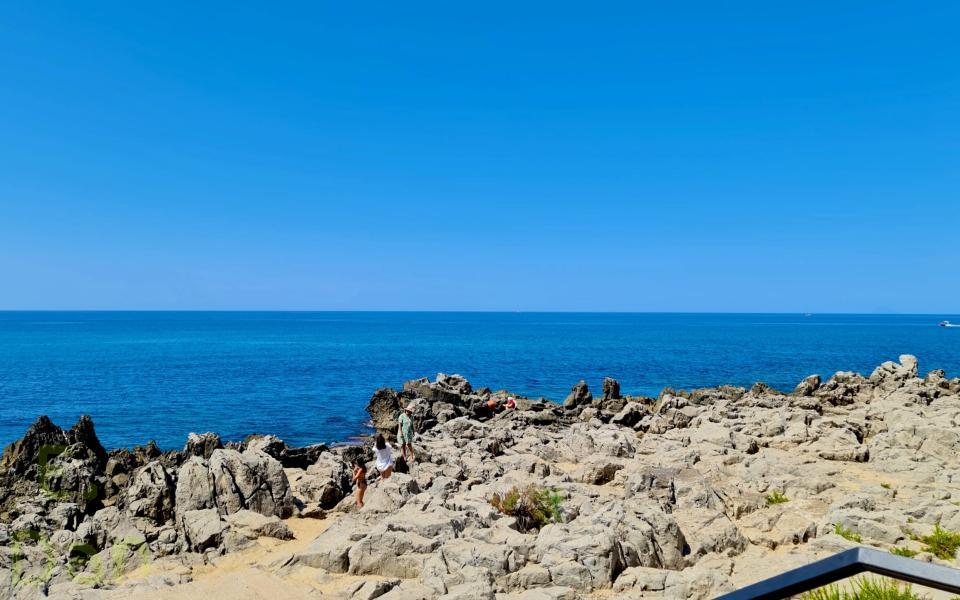
Cefalù, Italy 
Cefalù, Italy 
Cefalù, Italy