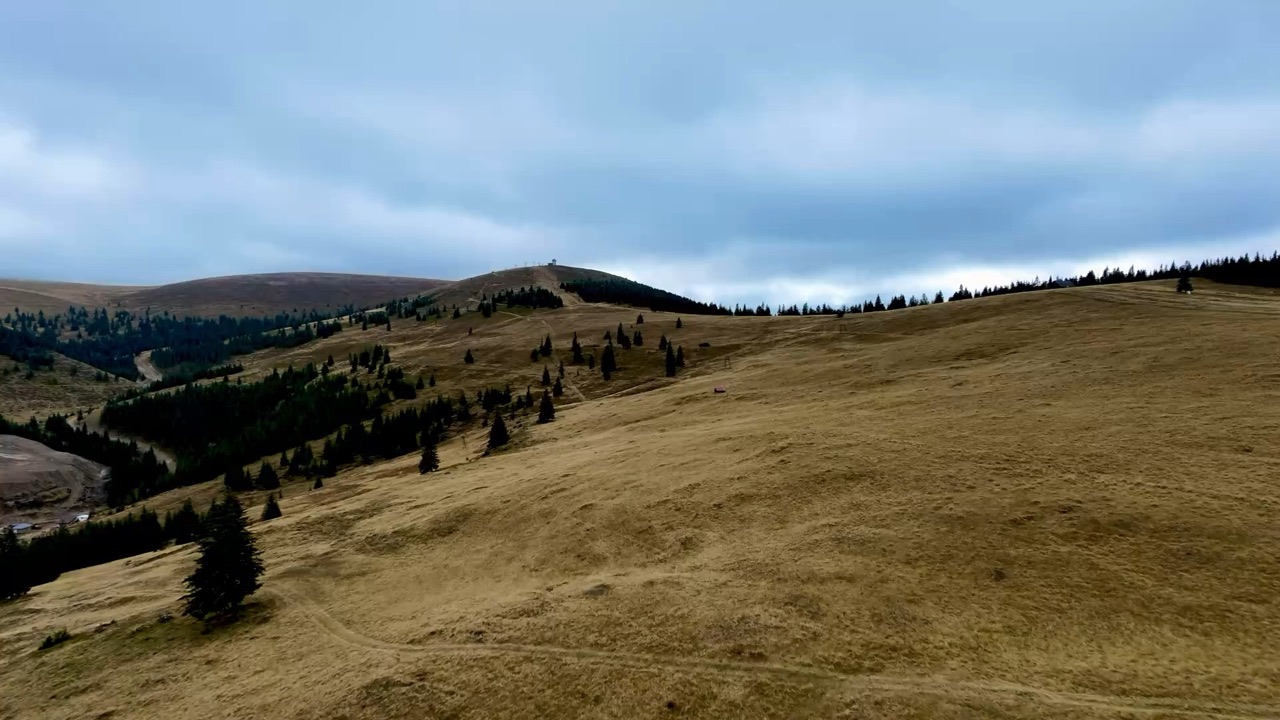
Șureanu Mountains
Photos in this gallery
Transfăgărășan, Transalpina, Maramureș, the Apuseni and Hunedoara · 2020 – 2026 · 38 photos
Rășinari
The road climbing from Rășinari, an old village south of Sibiu, toward the mountains under sunset-tinted clouds.

Rășinari, Romania
The western half of the Romania series covers everything west of the Rucăr–Bran corridor: the Făgăraș and Parâng Mountains with their two high mountain roads, the Mărginimea Sibiului villages, the Apuseni Mountains, the mountains of Banat, Hunedoara, Maramureș and Cluj. The photos, from 2020 to 2026, are in chronological order, so the same roads come back in different years and seasons.
Transalpina
The Transalpina, Romania's highest road, with alpine meadows and ridges fading to the horizon, in 2020 and 2022.

Transalpina, Novaci, Romania 
Transalpina, Novaci, Romania 
Transalpina, Novaci, Romania 
Transalpina, Novaci, Romania
Novaci
The alpine plateau above Novaci, where the Transalpina begins its climb to the Parâng ridge.

Novaci, Romania
Lake Colibița
Lake Colibița, between the wooded Bârgău hills, on a clear late-summer day.

Lake Colibița, Bistrița Bârgăului, Romania
The Merry Cemetery
The Merry Cemetery in Săpânța, with its carved wooden crosses painted blue, in front of the village church.

The Merry Cemetery, Săpânța, Romania
Ocna Șugatag
Haystacks in the meadows of Ocna Șugatag, in Maramureș, under an overcast late-summer sky.

Ocna Șugatag, Maramureș, Romania
The first chapters date from the summer of 2020. At Rășinari, an old village in the hills south of Sibiu, the road climbs toward the mountains in the evening light. The Transalpina, which crosses the Parâng Mountains and reaches 2,145 meters at Urdele Pass, the highest point of any road in Romania, appears with alpine meadows and ridges stretching to the horizon above the town of Novaci, and again in 2022. The Transfăgărășan, built across the Făgăraș Mountains in the early 1970s, is seen from Cârțișoara, its hairpins climbing through the fog.
Transfăgărășan
The Transfăgărășan from Cârțișoara, with the forested valley and the hairpins climbing toward the Făgăraș ridge through the fog.
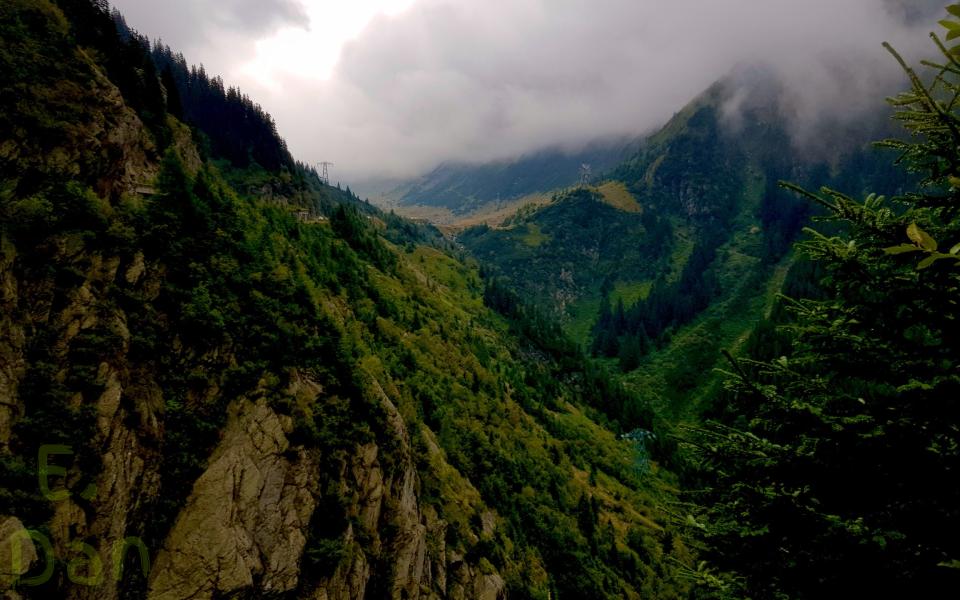
Transfăgărășan, Cârțișoara, Romania 
Transfăgărășan, Cârțișoara, Romania
Bigăr Waterfall
Bigăr Waterfall in the Nera Gorge, spilling over a curtain of moss and travertine, photographed before its 2021 collapse.

Bigăr Waterfall, Nera Gorge, Romania
Corvin Castle
Corvin Castle in Hunedoara, lit up at night, with the moon above its towers.

Corvin Castle, Hunedoara, Romania
Apuseni Mountains
The Apuseni Mountains near Posaga: limestone walls above the forest and open meadows in the August light.

Apuseni Mountains, Posaga, Romania 
Apuseni Mountains, Posaga, Romania
Posaga
A thatched hut in a meadow at Posaga, with the limestone ridges of the Apuseni behind it.

Posaga, Romania
In the north, Lake Colibița shines between the wooded Bârgău hills, and at Săpânța the Merry Cemetery shows its carved wooden crosses painted blue, with verses about the lives of those buried there, a tradition begun in the 1930s by the carver Stan Ioan Pătraș. At Ocna Șugatag, haystacks stand in the meadows under a cloudy sky. In 2024 the series returns to Maramureș: the wooden gate at Săcel, Bârsana Monastery and the Rodna Mountains, the highest range in the Eastern Carpathians, with a glacial lake still ringed by snow and the Horses Waterfall near Borșa, which drops about 90 meters.
ASTRA Museum
Thatched peasant houses painted blue in the ASTRA Museum in the Dumbrava Sibiului forest, in autumn.

ASTRA Museum, Sibiu, Romania
Șugag
Winter at Șugag: firs heavy with snow, the road into the mountains and a white summit above the forest.

Șugag, Romania 
Șugag, Romania
The Red Ravine
The Red Ravine near Sebeș, a geological reserve with walls of red clay and sandstone shaped by erosion.

The Red Ravine, Sebeș, Romania 
The Red Ravine, Sebeș, Romania 
The Red Ravine, Sebeș, Romania
Arpașu de Jos
A pond strewn with fallen leaves and a small wooden cabin at Arpașu de Jos, below the Făgăraș, in October colors.

Arpașu de Jos, Romania
To the southwest, Bigăr Waterfall in the Nera Gorge spills over a curtain of moss and travertine, photographed in November 2020, before much of it collapsed in 2021. Corvin Castle in Hunedoara, rebuilt in the 15th century by John Hunyadi as a Gothic residence, appears at night under the moon. In the Apuseni Mountains, at Posaga and Râmeț, limestone walls and gorges rise above meadows with thatched huts, and in Sibiu the ASTRA Museum gathers peasant houses from several regions of the country in the Dumbrava Sibiului forest.
Șureanu
Ski slopes and rounded summits in the Șureanu Mountains, under snow on a clear January day.

Șureanu, Petrila, Romania
Săcel
The carved wooden gate at Săcel, at the entrance to Maramureș County, in the evening light.

Săcel, Romania
Bârsana Monastery
Bârsana Monastery, with its tall shingle roofs, among meadows and flowers.

Bârsana Monastery, Bârsana, Romania
Rodna Mountains
The Rodna Mountains in early May: ridges still white, a glacial lake in its cirque and gentians in the meadow grass.

Rodna Mountains, Borșa, Romania 
Rodna Mountains, Borșa, Romania 
Rodna Mountains, Borșa, Romania 
Rodna Mountains, Borșa, Romania 
Rodna Mountains, Borșa, Romania
Horses Waterfall
The Horses Waterfall near Borșa, dropping about 90 meters between spruce trees.

Horses Waterfall, Borșa, Romania
In winter, the roads around Șugag run through snow-covered fir forest, and in the Șureanu Mountains ski slopes climb toward rounded summits; in October 2026, short drone clips show the same summits from above, with the meadows turned gold. In spring, the Red Ravine near Sebeș shows its walls of red clay and sandstone carved by erosion. The series ends at Călimănești, on the Olt Valley, with a bare forest mirrored in the water, and in Cluj-Napoca, with the city lit up at night and the statue of Matthias Corvinus, born in Cluj in 1443, in front of St. Michael's Church.
Râmeț
The Trascău Mountains at Râmeț, with limestone ridges, deep gorges and green hills in the September light.

Râmeț, Romania 
Râmeț, Romania
Călimănești
The bare November forest mirrored in the Olt River at Călimănești.

Călimănești, Romania
Matthias Corvinus Monument
The equestrian statue of Matthias Corvinus, born in Cluj in 1443, in front of St. Michael's Church on Unirii Square.

Matthias Corvinus Monument, Cluj-Napoca, Romania
Cluj-Napoca
Cluj-Napoca at night from above, with the spire of St. Michael's Church rising over the lit city.

Cluj-Napoca, Romania 
Cluj-Napoca, Romania Șureanu Mountains, Alba, Romania · Video Șureanu Mountains, Alba, Romania · Video Șureanu Mountains, Alba, Romania · Video Șureanu Mountains, Alba, Romania · Video Șureanu Mountains, Alba, Romania · Video