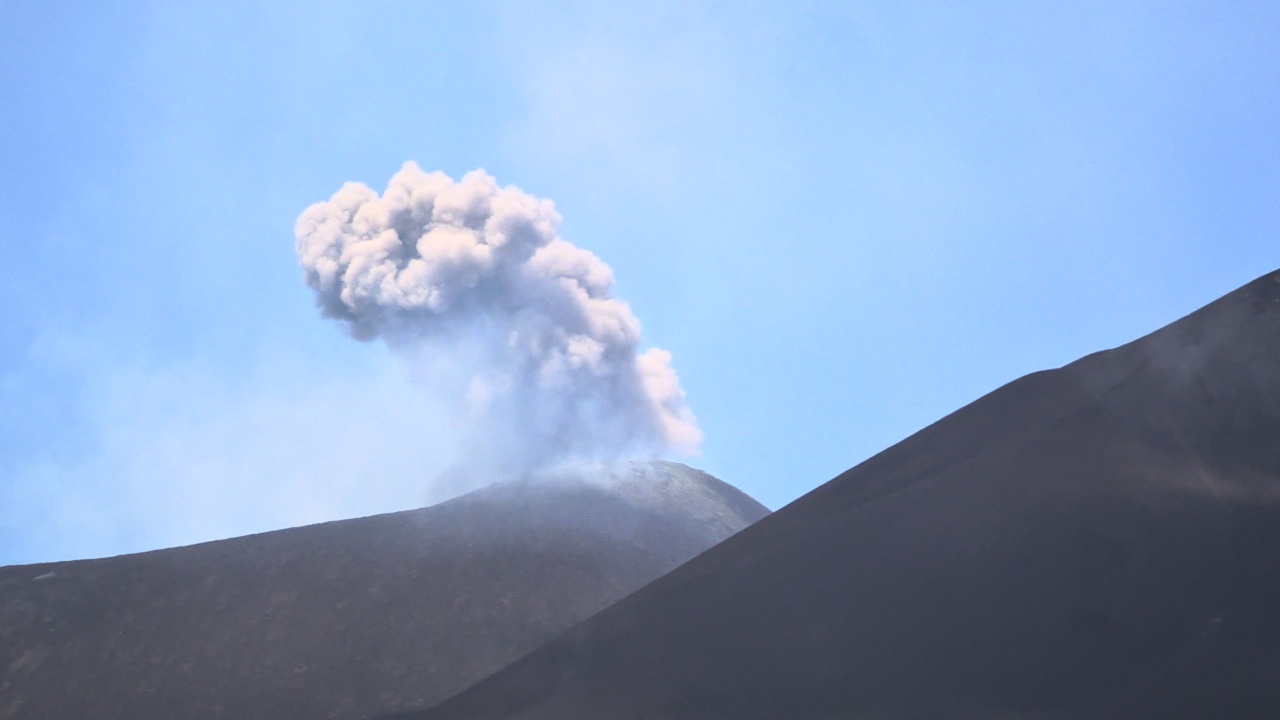
The red crater

← Previous photo: Smoke over the summit Next photo: The road to the summit →
All 84 photos in Sicily 2024
Etna, Greek temples and Taormina · Jul 2024 · 84 photos
Sicily at the end of July 2024: fierce sun, almost cloudless skies, turquoise sea and sun-baked stone. The route begins on the east coast, below Etna: in the evening, from Riposto, the volcano stands against the sunset, with lit clouds above it. Then Syracuse, a colony founded by Greeks from Corinth in the 8th century BC and today a UNESCO site together with the necropolis of Pantalica, with the island of Ortigia and the ruins of the Temple of Apollo.
Riposto
Etna at sunset, with lit clouds above the volcano, seen through palm fronds, and an avenue of palms lit at night.

Etna at sunset, Riposto, Italy 
Etna at dusk, Riposto, Italy 
The palm avenue at night, Riposto, Italy
Syracuse
The harbor and the island of Ortigia, the ruins of the Temple of Apollo among palms, the breakwater by Porto Piccolo and a small beach at sunset, with boats at anchor.

Syracuse harbor, Syracuse, Italy 
Porto Piccolo, Syracuse, Italy 
Temple of Apollo, Syracuse, Italy 
The Ortigia marina, Syracuse, Italy 
Syracuse, Italy
Isola Bella, below Taormina, is a small island tied to the shore by a narrow strip of pebbles and protected as a nature reserve. Etna, the tallest active volcano in Europe, is over 3,300 m high, a figure that changes with its eruptions. On the southern flank, above Nicolosi, the route climbs past 2,500 m. Mount Etna has been on the UNESCO list since 2013. The day of the climb, Etna's summit craters send up columns of grey ash every so often, rising above the cone and drifting apart in the wind.
Isola Bella
The island with its dense greenery, the bay with clear water among the rocks, the cliffs of the nearby cape and the Taormina coast.

Isola Bella, Taormina, Italy 
The bay at Isola Bella, Taormina, Italy 
The rocks at Isola Bella, Taormina, Italy 
Isola Bella, Taormina, Italy 
The cliff below Taormina, Taormina, Italy 
Isola Bella, Taormina, Italy 
Isola Bella, Taormina, Italy
Etna
The cable car over old lava, side craters rimmed in rust red, fields of lava and black ash, and smoke and columns of ash at the summit.

Rifugio Sapienza, Nicolosi, Italy 
The Etna cable car, Nicolosi, Italy The first ash burst, Nicolosi, Italy · Video The ash cloud drifting away, Nicolosi, Italy · Video 
Toward the craters, Nicolosi, Italy A crater in the fog, Nicolosi, Italy · Video 
Etna, Nicolosi, Italy An extinct crater, Nicolosi, Italy · Video 
A crater with red rims, Nicolosi, Italy 
Etna, Nicolosi, Italy 
The smoking summit, Nicolosi, Italy The explosion from afar, Nicolosi, Italy · Video The ash column, Nicolosi, Italy · Video 
The ash column, Nicolosi, Italy 
Etna, Nicolosi, Italy 
The summit in clouds, Nicolosi, Italy 
The lava field, Nicolosi, Italy 
Side craters, Nicolosi, Italy 
Etna, Nicolosi, Italy 
The volcanic cone, Nicolosi, Italy 
Lava and the summit, Nicolosi, Italy 
Lava blocks, Nicolosi, Italy 
Etna, Nicolosi, Italy 
A lava channel, Nicolosi, Italy 
An explosion at the summit, Nicolosi, Italy 
The red rock, Nicolosi, Italy Across the lava field, Nicolosi, Italy · Video 
Smoke over the summit, Nicolosi, Italy 
The red crater, Nicolosi, Italy 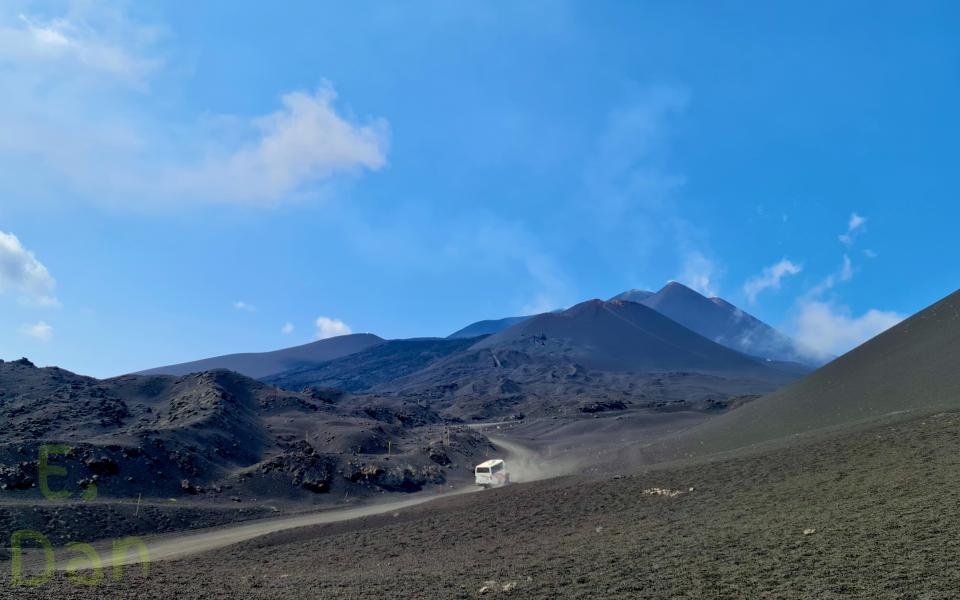
The road to the summit, Nicolosi, Italy
At Agrigento, the Valley of the Temples preserves the ruins of the Greek city of Akragas, founded in the 6th century BC. The Temple of Concordia is one of the best-preserved Doric temples in the world. The site has been on the UNESCO list since 1997.
Valley of the Temples
The temples of Juno, Concordia, Heracles and the Dioscuri, the city wall cut with tombs, the garden of Villa Aurea and the valley of the Kolymbethra garden.

Temple of Juno, Agrigento, Italy 
Temple of Juno, Agrigento, Italy 
Tombs in the city wall, Agrigento, Italy 
Walls of Akragas, Agrigento, Italy 
Temple of Concordia, Agrigento, Italy 
Concordia from the front, Agrigento, Italy 
Temple of Concordia, Agrigento, Italy 
Temple of Concordia, Agrigento, Italy 
Villa Aurea, Agrigento, Italy 
Temple of Heracles, Agrigento, Italy 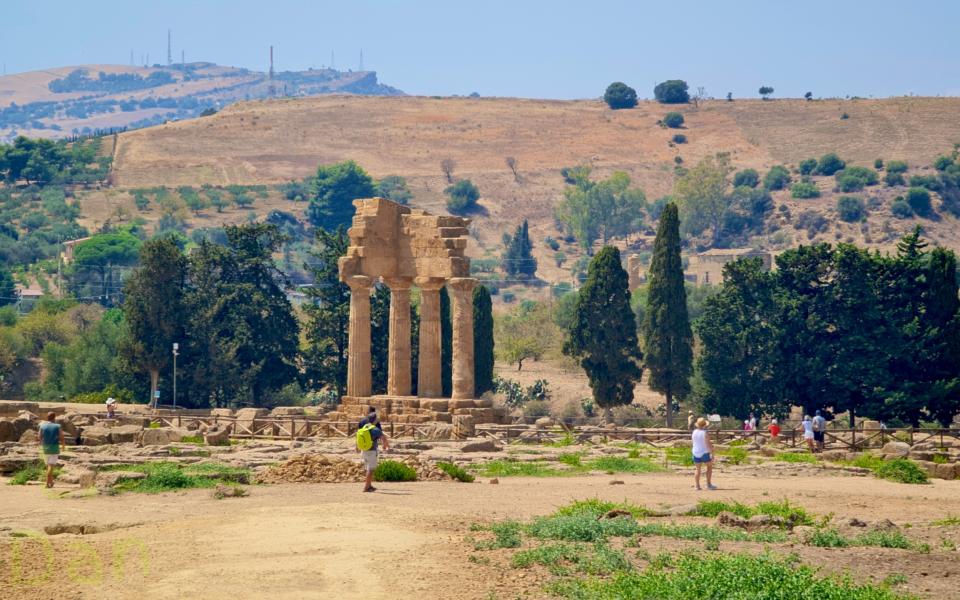
Temple of the Dioscuri, Agrigento, Italy 
Temple of the Dioscuri, Agrigento, Italy 
The Kolymbethra garden, Agrigento, Italy
On the northwest coast, the town of San Vito Lo Capo sits at the foot of Monte Monaco, and to the south opens Macari Bay, with Monte Cofano in the distance.
San Vito Lo Capo
The pale sand beach and turquoise water below Monte Monaco, the main street at dusk and Macari Bay, with clear water among the rocks.

San Vito Lo Capo beach, San Vito Lo Capo, Italy 
Clear water, San Vito Lo Capo, Italy 
San Vito Lo Capo, Italy 
San Vito Lo Capo, Italy 
The main street at dusk, San Vito Lo Capo, Italy 
Macari Bay, San Vito Lo Capo, Italy 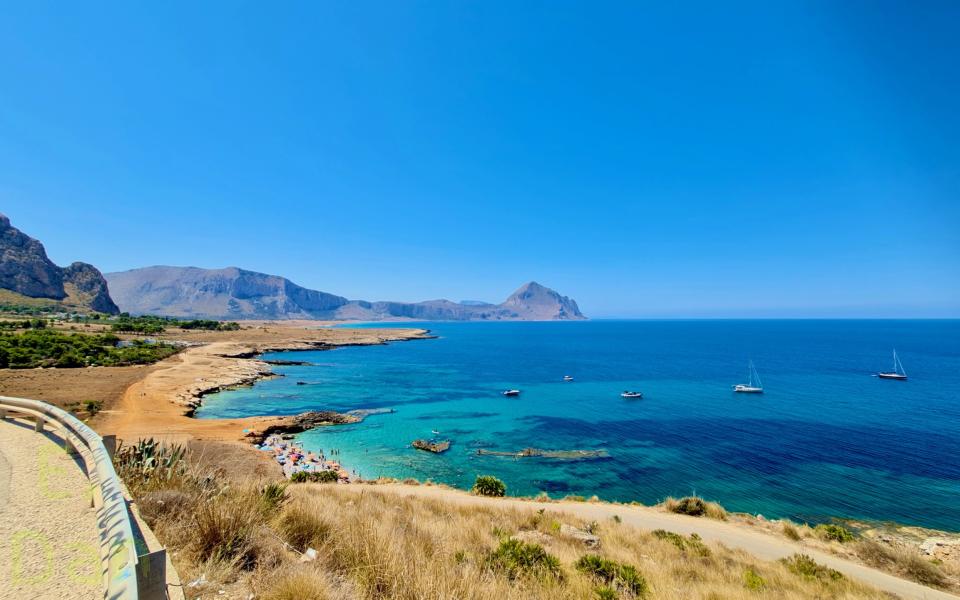
Macari Bay, San Vito Lo Capo, Italy 
The beach with umbrellas, San Vito Lo Capo, Italy
In the afternoon, Palermo, with its botanical garden founded in the late 18th century, and in the evening, Castellammare del Golfo, on the gulf that bears its name. Farther along the north coast, Cefalù. Its Norman cathedral, begun in 1131 by King Roger II, is part of the UNESCO site of Arab-Norman Palermo, together with monuments in Palermo and the cathedral of Monreale. Finally, back on the east coast, Acireale, with its cathedral square and the Baroque churches built after the 1693 earthquake.
Palermo
The botanical garden, with giant ficus trees and their aerial roots, bamboo, a dragon tree, lotus and iron greenhouses, then a Baroque church in the city.

A ficus in the Botanical Garden, Palermo, Italy 
The greenhouse, Palermo, Italy 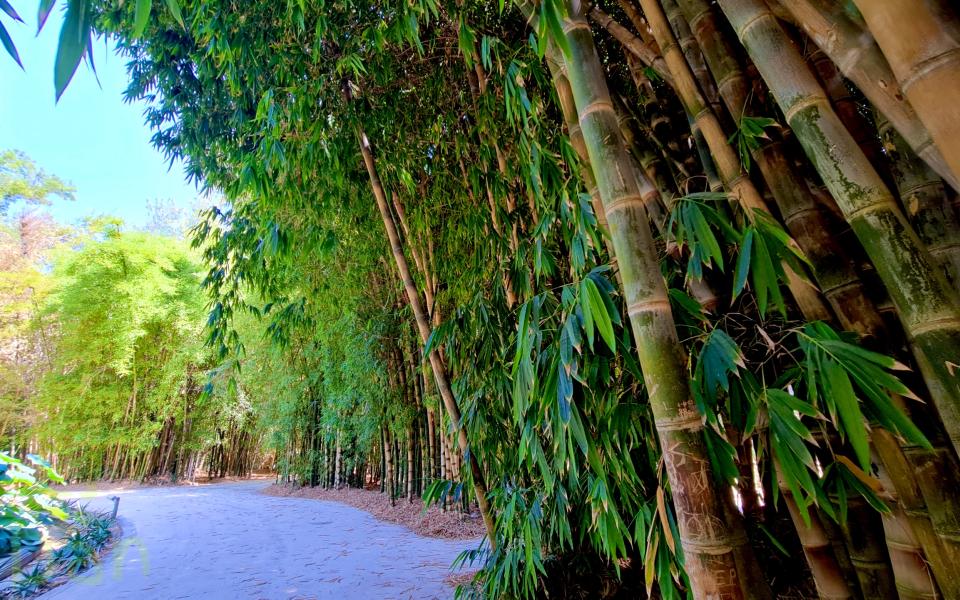
Bamboo, Palermo, Italy 
The dragon tree, Palermo, Italy 
Lotus, Palermo, Italy 
Botanical Garden, Palermo, Italy 
The giant ficus, Palermo, Italy 
Palms and the palace, Palermo, Italy 
The tree-lined path, Palermo, Italy 
The Gymnasium, Palermo, Italy 
A Baroque church, Palermo, Italy
Castellammare del Golfo
The town from the hill in the evening light, with its marina, the castle on the headland and the wide gulf.

Castellammare del Golfo, Italy 
Castellammare from above, Castellammare del Golfo, Italy 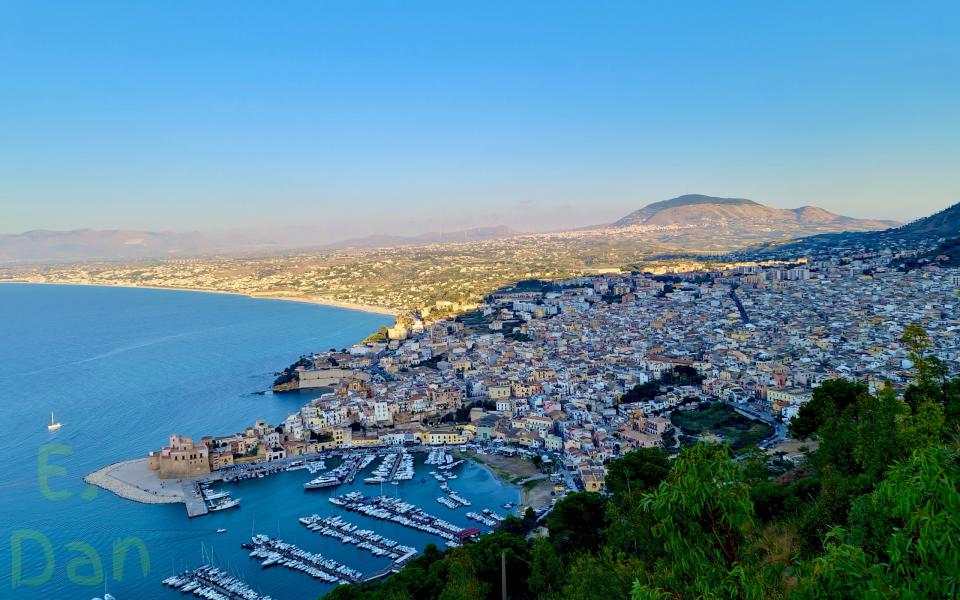
Castellammare del Golfo, Italy
Cefalù
The promenade and beach below La Rocca, narrow lanes, the twin-towered cathedral and stone houses on the rocks above the turquoise water.

The Cefalù promenade, Cefalù, Italy 
A street in Cefalù, Cefalù, Italy 
The beach and the town, Cefalù, Italy 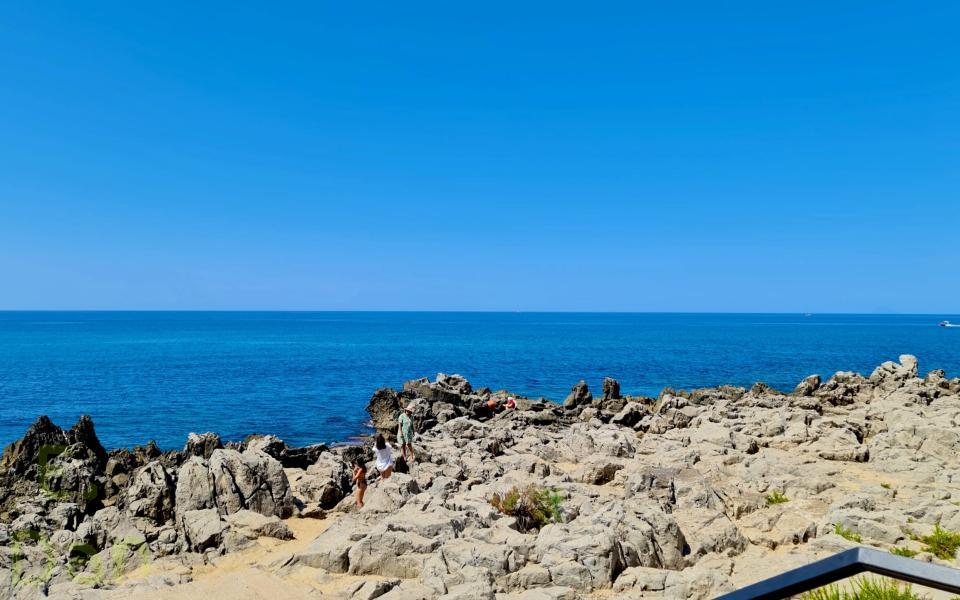
Cefalù, Italy 
The house on the rock, Cefalù, Italy 
Cefalù, Italy 
The rocky shore, Cefalù, Italy 
Cefalù Cathedral, Cefalù, Italy
Acireale
The cathedral square with its Baroque facades in the afternoon light and a colorful carnival float.

A carnival float, Acireale, Italy 
Acireale Cathedral, Acireale, Italy 
A Baroque church, Acireale, Italy